
Proximity Sensors Manufacturer
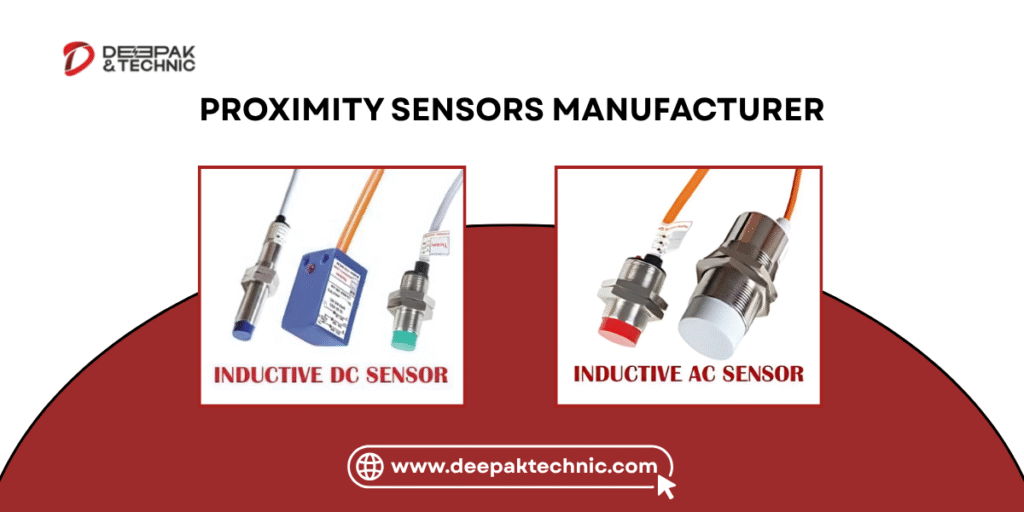
Table of Contents
Introduction
In the modern, fast-paced industrial world, efficiency and automation are now essentials rather than extras. A tiny but mighty gadget called a proximity sensor is at the core of automation. Numerous industries, including robotics, electronics, packaging, manufacturing, and the automobile sector, employ these sensors extensively.You need a partner who not only produces high-quality items but also comprehends your business needs if you’re looking for a reliable sensor manufacturer. This is where Technic & Deepak is unique. As a top producer of we provide dependable, long-lasting, and cutting-edge sensor solutions for a variety of sectors. We are the best Proximity Sensors Supplier.
What is a Proximity Sensor
An electronic gadget that senses the existence of items close by without making physical contact is called a proximity sensor. use electromagnetic fields, infrared, or ultrasonic technology to detect objects, as opposed to conventional switches or mechanical For instance a sensor quietly performs the function of automatic doors opening in shopping centers or cars identifying impediments in their immediate vicinity. We are the best Proximity Sensors Manufacturer in Maharashtra.
Why Choose Deepak & Technic
1. Experience and Expertise
- With years of experience in manufacturing proximity we understand the challenges industries face. Our expertise helps us provide innovative solutions for every application.
2. High-Quality Standards
- We follow strict quality control at every stage of production to ensure durable and reliable sensors. Our products are designed to perform even in demanding environments.
3. Wide Product Range
- Whether you need inductive, capacitive, or ultrasonic we provide a complete range of proximity for different applications.
4. Customization Options
- We know every industry has unique requirements. At Deepak & Technic, we offer customized sensor solutions to fit your specific needs.
5. Cost-Effective Solutions
- Our proximity sensors are designed to provide maximum value at competitive prices, ensuring long-term savings for your business.
6. Customer-Centric Approach
- We don’t just sell products; we build relationships. Our dedicated support team ensures quick assistance and after-sales support for your convenience.
7. Trusted by Leading Industries
- Our proximity sensors are trusted by top companies across manufacturing, automotive, and automation sectors.
Applications of Proximity Sensors
1. Industrial Automation
- In factories and production lines, proximity sensors are used to detect parts, monitor machinery, and ensure precise operations. They help automate processes, reduce human error, and increase productivity.
2. Automotive Industry
- Proximity are widely used in vehicles for parking assistance, collision avoidance, and automated assembly lines. With the rise of electric and autonomous vehicles, the importance of these has grown significantly.
3. Robotics
- Modern robots rely heavily on for navigation and object detection. These sensors allow robots to operate safely alongside humans and perform complex tasks with high accuracy.
4. Consumer Electronics
- From smartphones to home appliances enhance user experience. For instance, in mobile devices, they detect when the phone is near your ear to turn off the display during calls.
5. Security Systems
- Proximity sensors are an integral part of advanced security systems, including access control and intruder detection. They enable non-contact detection, making security more efficient and reliable.
6. Medical Equipment
- In healthcare are used in medical devices for non-contact measurements and automated patient monitoring, ensuring safety and hygiene.
Importance of Proximity Sensors
1. Non-Contact Detection
- One of the most significant advantages of sensors is that they can detect objects without physical contact. This reduces wear and tear, lowers maintenance costs, and increases the lifespan of machinery.
2. Enhanced Safety
- In automated systems act as safety devices. For instance, they can detect the presence of humans near hazardous machines, triggering a stop mechanism to prevent accidents.
3. Precision and Efficiency
- Proximity sensors provide accurate and fast detection, which improves operational efficiency. They are essential in robotics, conveyor belts, assembly lines, and other automated systems where precision is crucial.
4. Versatility Across Industries
- From automotive and electronics to packaging and material handling are used in various sectors. Their adaptability makes them indispensable in modern industrial applications.
5. Cost-Effective Automation
- By reducing errors, minimizing downtime, and automating repetitive tasks sensors save companies both time and money, making them a smart investment for businesses.
Benefits of Using Proximity Sensors
1. Non-Contact Detection
- Proximity sensors can detect objects without physical touch, reducing wear and tear. This feature ensures a longer lifespan and lower maintenance costs compared to traditional switches.
2. High Precision and Accuracy
- These provide precise detection, which is crucial for automation processes in manufacturing, assembly lines, and robotics. Accurate sensing improves productivity and reduces errors.
3. Enhanced Safety
- In industrial environments sensors act as safety devices by detecting human presence near dangerous machinery, preventing accidents, and ensuring compliance with safety standards.
4. Cost-Effective
- Although the initial investment might seem higher than mechanical switches sensors reduce long-term operational costs due to lower maintenance, fewer replacements, and improved efficiency.
5. Versatile Applications
- Proximity sensors can be used in various industries, including automotive, electronics, robotics, food processing, packaging, and material handling. This versatility makes them a valuable addition to any industrial setup.
6. Durability in Harsh Conditions
- High-quality are designed to withstand harsh environments, including dust, heat, moisture, and vibrations, making them reliable even in challenging industrial conditions.
Types of Proximity Sensors
1. Inductive Proximity Sensors
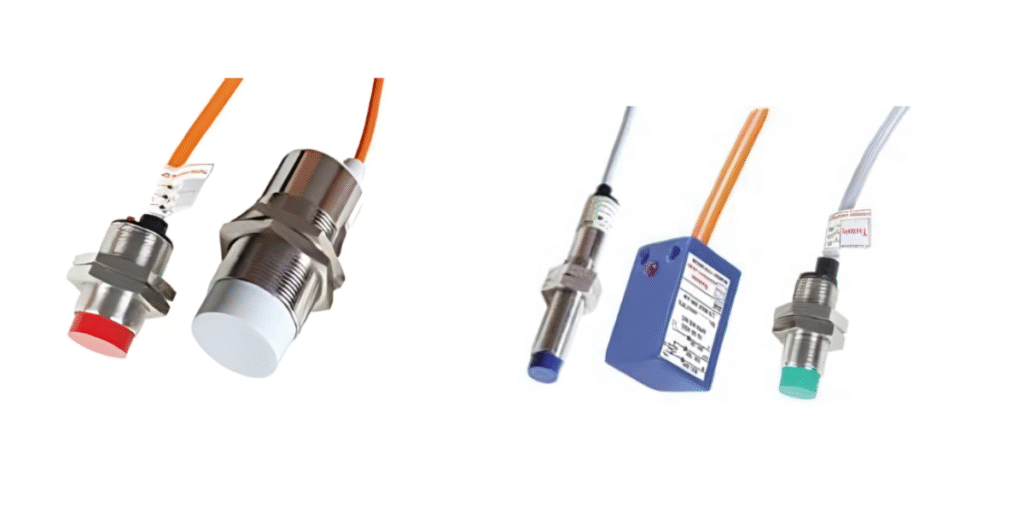
- Inductive are used to detect metallic objects. They work based on electromagnetic fields. When a metal object enters the sensor’s detection range, it changes the field, triggering the sensor.
2. Capacitive Proximity Sensors
- Capacitive detect both metal and non-metal objects, including liquids and powders. They measure changes in capacitance caused by the of an object.
3. Ultrasonic Proximity Sensors
- Ultrasonic use sound waves to detect objects. They send ultrasonic pulses, which reflect back when they hit an object. The sensor calculates distance based on the time taken for the echo to return.
4. Photoelectric Proximity Sensors
- Photoelectric use light beams to detect objects. When an object interrupts or reflects the light beam, the sensor triggers an output signal.
5. Magnetic Proximity Sensors
- Magnetic detect magnetic fields and are commonly used for position detection of doors, levers, or machinery components.
Conclusion
Proximity sensors are an integral part of modern industrial automation. They improve efficiency, accuracy, and safety in various applications, making them a smart investment for any business. Choosing the right proximity manufacturer is essential to ensure quality and long-term reliability.
Deepak & Technic stands out as a trusted and reliable manufacturer, offering a wide range of high-quality sensors, tailored solutions, and expert support. By partnering with us, you can ensure your industrial processes are efficient, precise, and safe.